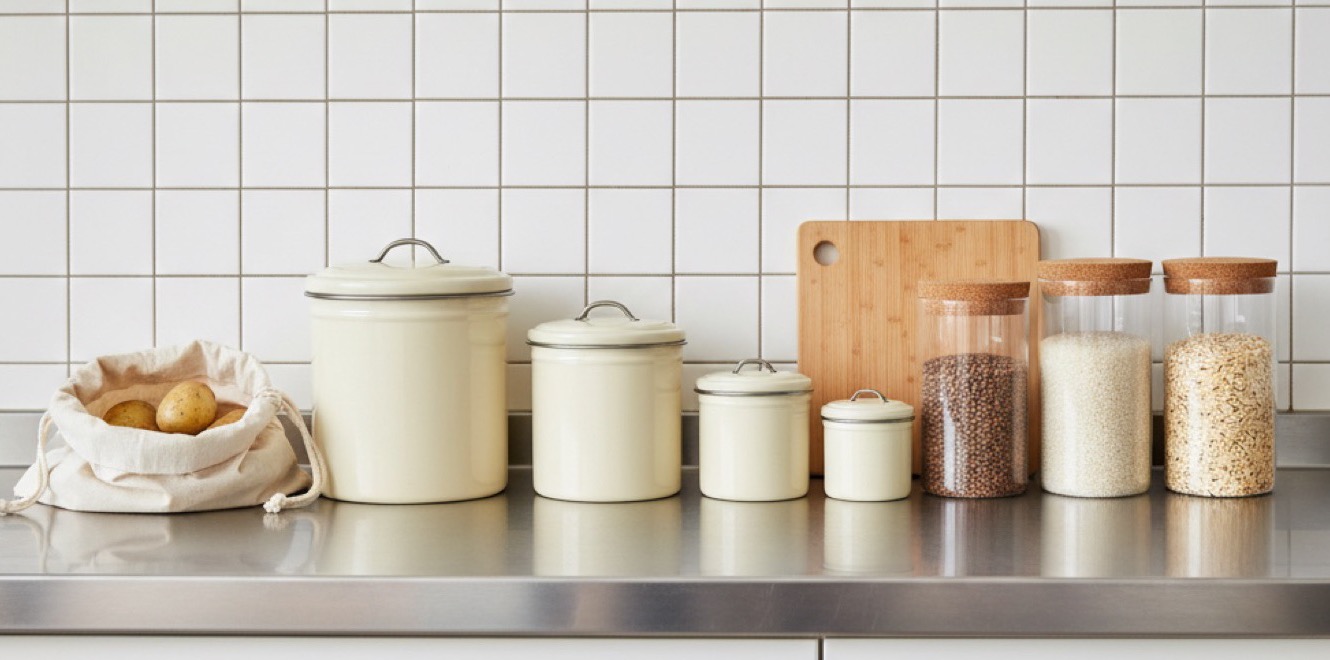
Enamel, glass, steel, beech
Storage that outlives what you keep in it
Tins, jars, bins and boards for the pantry and the bench. We sell four materials, we can tell you the gauge of every one of them, and we have sold the same tin long enough to know how it fails.
See the twelveWhat we sell and why
Four materials, chosen for how they age
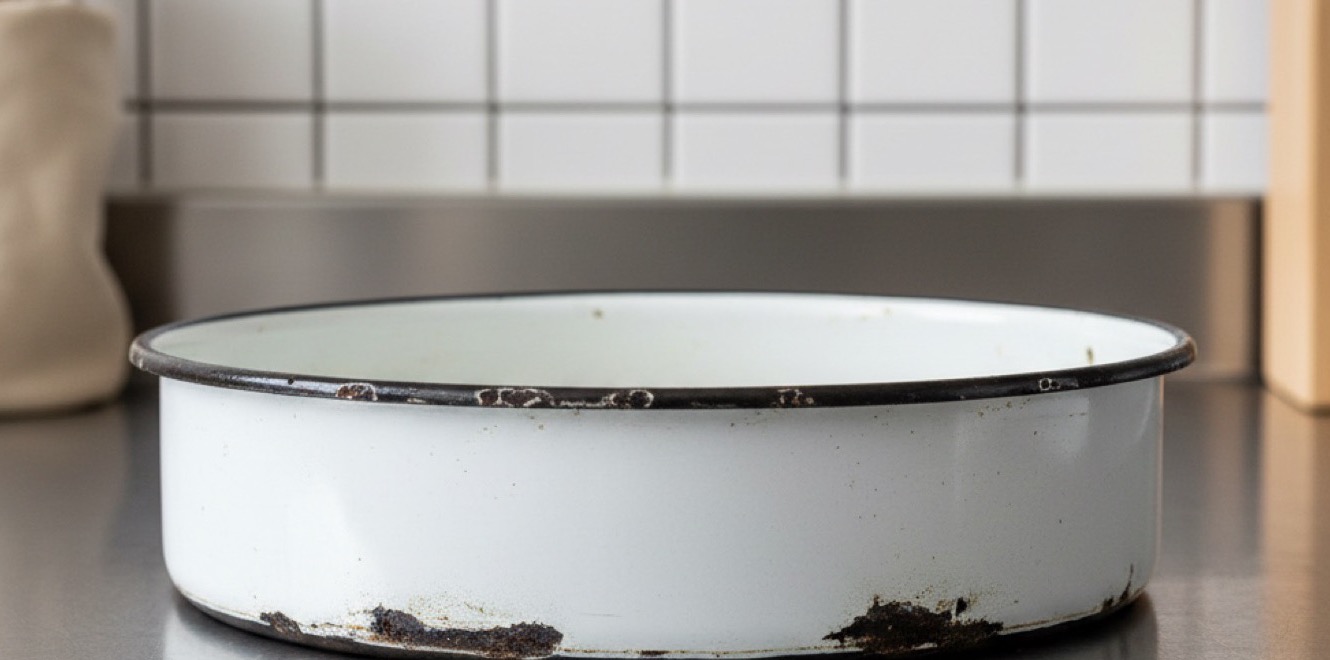
Vitreous enamel over pressed steel. Powder coat is paint and it peels in a sheet. Enamel is glass, fused onto 0.6 mm steel at around 800 °C, and it does not peel — it chips. Ours is three coats: ground coat, then two of colour. A chipped tin keeps working; it just shows a dark steel eye where the glass went.
Borosilicate glass, not soda-lime. The jars are borosilicate because it takes a temperature change without cracking, so you can wash one in hot water straight off a cold shelf. It is also clearer, which matters when the point of the jar is seeing how much flour is left.
Tinned steel. The scoops and spice tins are steel with a tin coating — the old commercial-kitchen material, light and cheap to replace. It will spot if you leave it wet in the rack. Dry it and it lasts decades.
European beech. Close-grained, hard enough to take a knife without opening up, and pale enough that you can see when it needs oil. Not bamboo, which is laminated grass held together with adhesive and delaminates at the glue line.
The range
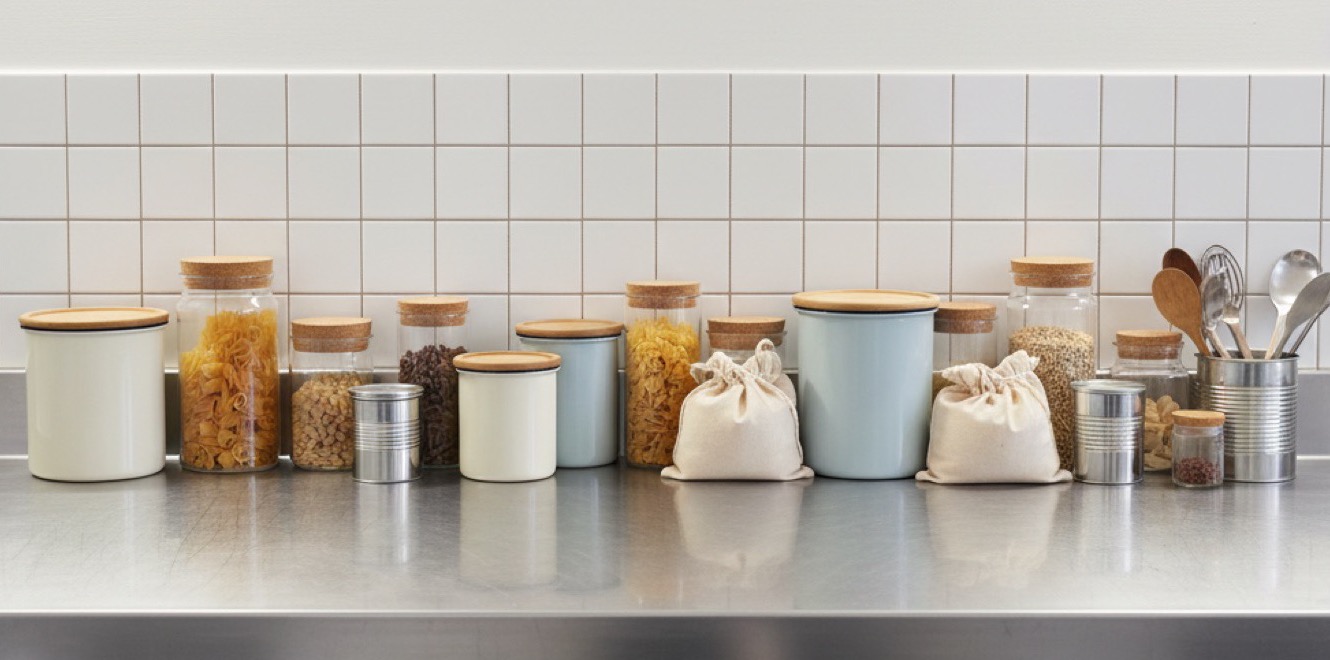
Twelve pieces · prices in AUD
About us
We sold this tin over a counter before we sold it in a box
Halstead Goods is run by Ruth Halstead and Peter Nham out of a warehouse in Marrickville, in Sydney's inner west. Ruth spent most of her working life behind a restaurant supply counter in Alexandria, selling the same enamel storage tins to the same commercial kitchens over and over. Kitchens do not buy on looks. They come back and tell you exactly what broke and how — which lids warp, which handles pull through, which coating goes on the second year.
The tins we sell now are the ones that kept coming back for reorders and never came back as a complaint. Ruth chooses the range and deals with the factories. Peter runs the warehouse, packs the orders and answers most of the emails, so if you write to us about a dented lid you are writing to the person who taped the box.
We buy direct from four manufacturers — an enamelling works in Poland, a glassworks in Germany, a tinsmith and a small timber shop. We do not brand the goods with our name, because a tin with a logo pressed into it is a tin you have to come back to us to match. We would rather sell you something you can replace anywhere.
What we will not do: tell you a tin is airtight when it has a press-fit lid, describe a cork stopper as a seal, or photograph the range in a kitchen nobody cooks in. If something in this shop is the wrong tool for what you are doing, write to us and we will say so.
Flat $13, Australia-wide
One rate to every address in the country, metro or regional. Orders are picked and dispatched from Sydney in two to four business days, then it is standard parcel post.
Faults and transit damage
Tell us within seven days of delivery, send a photograph, and we replace the piece or refund it. This covers faults and damage in transit. It is not a change-of-mind return.
Enamel chips. Cork swells.
Drop a tin on tile and the glass will chip to dark steel. Cork stoppers swell in a humid summer and shrink again. Beech greys without oil. None of that is a fault and we would rather you knew first.
Questions
Are the enamel tins airtight?
No. They have a press-fit lid, which is close but not sealed — good for flour, rice, pasta, biscuits and anything you get through in a few months. For coffee beans or ground spice you want the glass jars with the cork in, and even then cork is a stopper rather than a gasket. If you need a genuine airtight seal, you need a clamp lid with a rubber gasket, and we do not sell one.
What happens when the enamel chips?
It chips down to the steel and you get a dark spot with a slightly sharp edge. It will not spread the way paint does, because there is nothing underneath to lift. Dry the chip after washing and it will sit there for years; leave water on bare steel and it will eventually rust from that point. We chip tins ourselves in the warehouse from time to time and keep using them.
Can any of this go in the dishwasher?
The enamel tins, the colander, the measuring jugs and the glass jars can, though repeated hot cycles will dull the enamel gloss over a few years. The cork stoppers, the beech board, the beech brushes and the tinned steel scoops cannot — dishwasher heat and detergent will dry the cork out, raise the grain on beech, and strip the tin coating off the scoops. Those four go in the sink and get dried.
Can I put an enamel tin on the stove or in the oven?
No. These are storage, not cookware. The lids and handles are not made for direct heat, and thermal shock on a piece that was not designed for it is how enamel crazes. The colander will take boiling water poured through it, which is what a colander is for, but nothing here goes on a burner.
How do I look after the beech board?
Wash it by hand, dry it standing on edge so both faces dry evenly, and oil it when the surface stops beading water — food-grade mineral oil, roughly every couple of months at first and less often later. Do not use olive or vegetable oil; it goes rancid in the grain and you will smell it. Beech that never gets oiled goes grey and pale and will eventually check along the glue lines.
The scoops have gone spotty. Are they faulty?
Almost certainly not. Tinned steel spots if it is left wet, especially sitting in a drainer overnight. Rub it back with a dry cloth and keep them dry and the spotting stops. If a scoop arrives already marked under the tin coating, that is a fault and it is covered — send us a photo.
Will the cork stoppers fit tightly all year?
They will change. Cork is bark, and it takes on moisture in a humid Sydney summer and gives it back in a dry winter — so the same stopper can be firm in February and a touch loose in July. Roll it gently between your palms before you seat it and it will grip. If a stopper is loose enough to fall out of an upended jar, tell us and we will send a replacement.
How much do the jars and tins actually hold?
Capacities are on every listing in litres or millilitres, measured to the fill line rather than to the brim. As a rough guide, the 2.5 L storage tin swallows a standard supermarket kilo of plain flour with a little room to get a scoop in; the 1.4 L jars take 1 kg of rice or about 750 g of pasta. If you tell us what you are storing we will tell you which size actually fits it.
Something arrived dented or broken. What now?
Email hello@halsteadgoods.com within seven days with a photograph of the damage and the outer box if you still have it. We replace it from stock or refund it, your choice, and you do not have to post the damaged piece back unless we ask. Photographing the box matters — it tells us whether the carrier crushed it or we packed it short.
Do you sell spare lids, stoppers and parts?
Yes, and we would rather you asked than replaced the whole thing. We hold spare cork stoppers, spare press-fit lids for the storage and spice tins, and replacement fibre heads for the brushes. Email us with the piece and the size and we will post the part out on the same flat rate.